This Maker forecast is for investors deciding how to deploy spare cash. Review the sourced MKR return and drawdown history, test the 2026 and 2030 scenarios, and compare other uses of the same funds.
MKR last closed at $1,284.64 on 2026-07-28, and rose 9.1% over roughly one month from $1,177.02.
Across the observed 1 year window, Maker produced a -40.8% annualized return and a 54.20% maximum closing-price drawdown. For this decentralized finance asset, that recent move should be read beside the full stress history rather than treated as proof that the DeFi credit and stablecoin token thesis will continue.
This dated context frames the MKR forecast scenarios below; it is not itself a prediction.
UBI Scenario Score18/100Cautious profile
Passive base case-40.8%annual scenario model
Stress drawdown-54.2%Moderate stress history
Source seriesCoinGecko fallback2026-07-28
Calculator coverage1 periods · 1 yearSourced historical periods
Asset typeCryptoMKR
MKR forecast logic
Is Maker a good investment for idle cash?
Maker is a DeFi credit and stablecoin token in decentralized finance. The answer depends on return potential, valuation or token demand, time horizon and whether the investor can tolerate the observed drawdown.
The useful forecast question is not one exact target price. It is whether the base case is attractive enough after considering downside and other ways to deploy spare funds.
Bull, base and bear cases
How to read the 2026 and 2030 scenarios
The base case uses -40.8% annually. The bear case applies the observed -54.2% maximum drawdown once. The bull case uses -13.7%, following the sourced rule shown below.
These are scenario bands, not predictions. Use them to test an investment amount rather than assuming the market will follow one clean line.
Maker forecast scenarios for a $10,000 investment
MKR or alternative path
Asset-specific assumption
Stress / annual return
$10,000 after 3 years
Maker bear case
MKR repeats its observed maximum drawdown once, then remains flat
-54.2%
$4,580
Maker base case
MKR delivers the modeled decentralized finance return
-40.8%
$2,080
Maker bull case
MKR benefits from strong demand for decentralized finance exposure
Reported 14% monthly platform average applied to the same starting capital
+381.8%
$1,118,342
This Maker price prediction 2026 and 2030 table keeps capital and horizon equal. The bear value applies the historical maximum drawdown once rather than repeating it annually. The automated trading row is reported-history scenario math, not a promise that it will outperform Maker.
MKR 2026 forecast
Maker forecast for 2026
Using the base-case -40.8% annual assumption, a $10,000 MKR position would model to $5,925 after one year. The bear case is -54.2% and the bull case is -13.7%.
MKR 2030 forecast
Maker forecast for 2030
Over a five-year horizon, the same base assumption would model to $730. This section is designed for long-tail searches like "MKR forecast 2030" and "Maker price prediction 2030."
Auditable MKR forecast inputs
How the MKR bear, base and bull cases were derived
Annualized return from $2,164.453 to $1,284.64 across the stated observation window.
Stress case
-54.20%
Largest peak-to-trough decline observed in the same closing-price series.
Bull case
-13.7%
Base CAGR plus half the observed maximum drawdown: -40.75% + (54.20% / 2).
These historical measurements make this MKR forecast page reproducible; they do not predict that the asset will repeat the same return or drawdown.
Original UBI.quest analysis
Maker UBI Scenario Score: 18/100
Prepared by the UBI Research Desk and updated 2026-07-28. This is a proprietary comparative scenario model, not an analyst consensus target or a live-data recommendation.
Model dimension
Score
How it affects the forecast
Upside capacity · 40%
0/100
Normalizes the -40.8% base assumption against the return range used for crypto assets.
Drawdown resilience · 30%
46/100
Rewards assets with a smaller modeled stress drawdown. MKR's stress input is 54.2%.
Thesis conviction · 20%
0/100
Combines the editorial strength of the DeFi credit and stablecoin token thesis with its return and risk assumptions.
Uncertainty adjustment · 10%
46/100
Penalizes scenarios where volatility can overwhelm the expected return.
Smart-contract, liquidity and regulatory risks can invalidate adoption assumptions
A drawdown near the modeled 54.2% stress range
A broad risk-off market that reduces liquidity and valuation multiples
Invalidation rule: The base case should be reconsidered if MKR suffers a drawdown beyond roughly 54.2%, loses relative strength within decentralized finance, or the DeFi credit and stablecoin token thesis no longer matches observable network adoption, liquidity or ecosystem progress.
Evidence to verify before using this forecast
Evidence area
What to check
Supply and dilution
Verify circulating supply, emissions, unlocks and treasury activity using current project and market data.
Network usage
Check active usage, fees, liquidity and ecosystem activity relevant to decentralized finance.
Market structure
Review exchange liquidity, concentration and relative strength; the current UBI score does not ingest a live on-chain feed.
This evidence checklist is intentionally separate from the score. It prevents a historical or editorial scenario input from being mistaken for a live fundamental or on-chain rating.
Protocol, chain, fee and liquidity data where applicable
2026-07-28
The scenario audit block above uses the specifically identified CoinGecko market data; these additional links support broader reader verification. The UBI Scenario Score remains a comparative model rather than a live recommendation.
Forecast drivers
Key variables to watch before investing
For MKR, the main variables are sector momentum, valuation, liquidity, volatility and whether investors keep rewarding decentralized finance exposure.
A strong story can still be a poor investment if expectations are already excessive or the holding period is too short.
Alternative for idle funds
How automated trading differs from owning MKR
Owning Maker is passive exposure to one asset. Automated trading actively enters and exits crypto positions and adds execution, custody, exchange, strategy and platform risk.
The reported return used below is an editable benchmark, not an expected or guaranteed outcome.
Enter the idle funds you are considering for Maker. Adjust the -40.8% annual MKR case and the automated trading assumption to compare two different risk paths.
This forward model compounds an editable -40.8% annual MKR assumption. It is separate from the sourced historical calculator above.
Default forward scenario in static HTML
Path
Default assumption
Total contributed
Modeled value after 3 years
Modeled gain / loss
Maker
-40.8% annual MKR scenario
$0
$0
$0
Aurum automated trading
14% monthly reported-history scenario
$0
$0
$0
This static table mirrors the calculator's default inputs so search crawlers and AI answer engines can read the result without executing JavaScript.
Maker forecast questions investors actually ask
What is the Maker forecast for 2026 and 2030?
The model uses a -40.8% annual base case, -54.2% stress case and -13.7% bull case. These are sourced scenario inputs, not guaranteed target prices.
Is Maker a good investment in 2026?
Maker may suit investors who understand decentralized finance and can tolerate an observed maximum drawdown of 54.2%. It is not suitable for emergency cash or money needed on a fixed near-term date.
Will Maker go up in 2026?
No one can verify that in advance. The sourced base case is -40.8% annually, but the historical stress case shows that MKR can decline sharply even when the longer-term thesis remains credible.
What could cause Maker to crash?
Smart-contract, liquidity and regulatory risks can invalidate adoption assumptions; A drawdown near the modeled 54.2% stress range; A broad risk-off market that reduces liquidity and valuation multiples. A future decline could exceed the historical 54.2% maximum drawdown used by this model.
Is Maker overvalued at its current market price?
Token price alone does not establish valuation. Review circulating supply, emissions, fees, liquidity and network use; this page's historical return and drawdown cannot determine a fair value by themselves.
How might Maker perform in a crypto bear market?
A risk-off environment can reduce liquidity and compress valuations across decentralized finance. Use the bear case as a stress test, not as a maximum possible loss.
Should idle funds go into MKR or automated trading?
Owning MKR is passive exposure to Maker; automated trading adds execution, futures, custody and platform risks. The 14% monthly figure is reported historical performance and produces striking compounded math, but it is not guaranteed.
About this MKR research page
How UBI Research AI built this Maker price prediction 2026 and 2030 page
UBI Research AI checked the sourced MKR price history, historical-return math and published Scenario Score. Automated trading remains outside the asset score as a separate use-of-idle-funds benchmark. The author does not own MKR, receive issuer access or treat any reported return as guaranteed.
Copy the snippet below to embed the calculator. Please keep the UBI.quest credit link with the embed so readers can open the original tool and methodology.
The embed includes a link back to this UBI.quest calculator page.
Final Aurum check
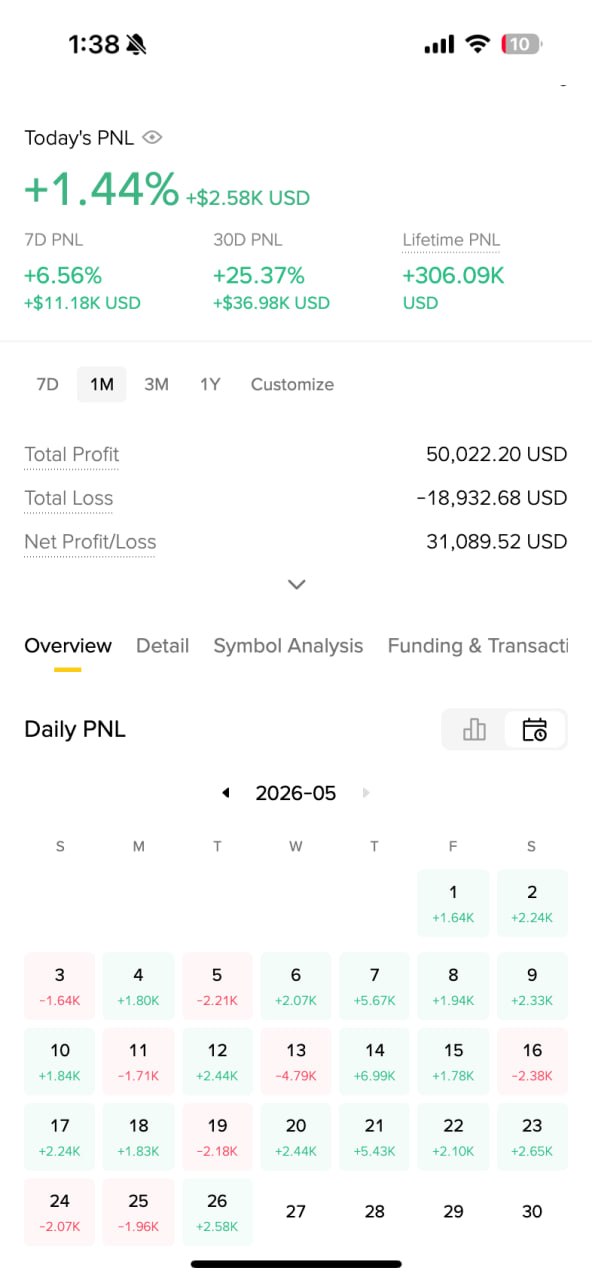
Ready to compare the automated trading route?
The calculator above shows why the Aurum benchmark deserves attention: with the default settings, the automated trading scenario models to $1,118,342 after three years. Before clicking out, review the evidence and decide whether a small sponsored test fits.
1Review the proof
Check screenshots, withdrawal context and what the evidence does not prove.
2Size the test
Use a capped amount you can afford to lose and lower the 14% assumption.
3Use the sponsored link last
Only leave UBI.quest after the risk and platform-flow checks are done.